Topical Cannabinoids in Inflammatory Dermatoses
Last Updated
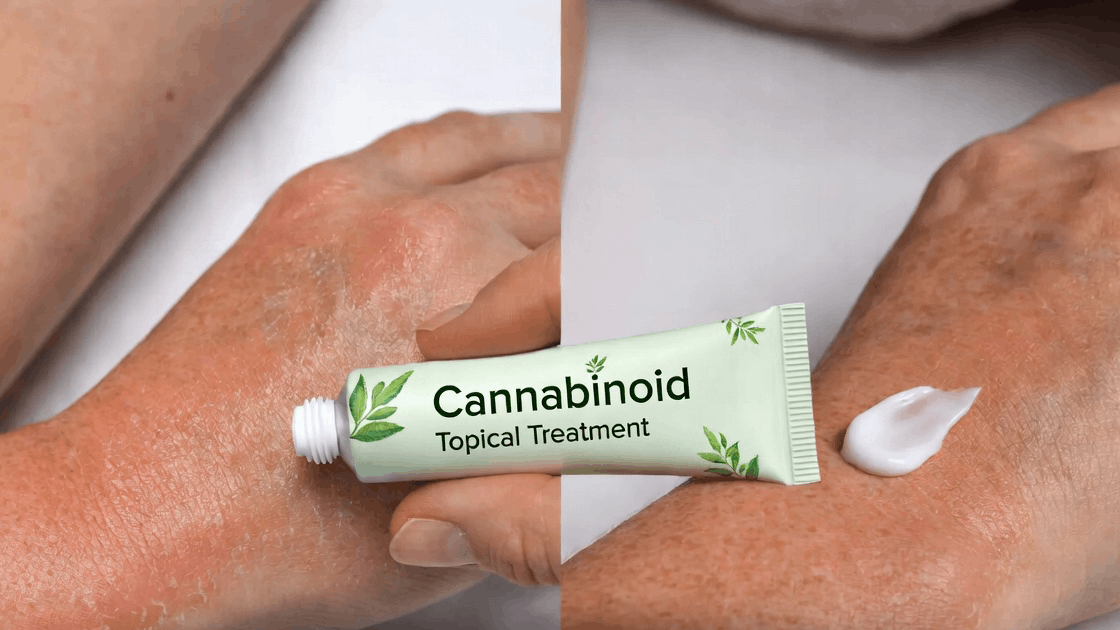
Topical cannabinoids target the cutaneous ECS for acne (sebum suppression), atopic dermatitis (itch/barrier), and psoriasis (keratinocyte proliferation)
Hytiva Research | Article 2 of 3: Cannabinoids and Skin Conditions
Introduction
Skin is the body's largest organ — and, it turns out, one of its most pharmacologically sophisticated. For decades, dermatological research centered on the immune and structural biology of the skin. A growing body of evidence now reveals a second, overlapping regulatory system active at every level of skin tissue: the cutaneous endocannabinoid system (ECS). Epidermal keratinocytes, sebaceous gland-derived sebocytes, hair follicles, and resident immune cells all express functional ECS components — including the CB1 and CB2 cannabinoid receptors, the ionotropic channel TRPV1, and the nuclear receptor PPAR-γ — establishing the skin as a genuine pharmacological target, not simply a delivery surface.[^1]
This architecture matters. The same receptor networks that regulate inflammation, cell proliferation, and sensory signaling throughout the body are active in skin tissue, governing sebum production, keratinocyte cycling, epidermal barrier integrity, and local immune responses. When ECS function is dysregulated — as evidence suggests it may be in acne, atopic dermatitis, and psoriasis — pharmacological intervention becomes a biologically plausible, mechanistically grounded strategy. CBD-infused topicals are now widely available at dispensaries and wellness retailers, and public interest in their dermatological applications is high. The science behind that interest is real — but unevenly developed. Mechanistic research has substantially outpaced clinical trial data, and most commercially available formulations have not been evaluated in controlled human studies. This article examines what the evidence actually shows for three of the most prevalent inflammatory skin conditions, tracing the arc from receptor biology through mechanistic findings to the nascent but promising clinical record.
Fast Facts
- CB1, CB2, TRPV1, and PPAR-γ are all expressed in human skin cells — including keratinocytes, sebocytes, and cutaneous immune cells — establishing the skin as an active ECS participant with genuine pharmacological targets for cannabinoid intervention.[^1]
- A 2014 study in the Journal of Clinical Investigation demonstrated that CBD suppresses excess sebum production and pro-inflammatory cytokine release in primary human sebocytes — the strongest mechanistic case for cannabinoids in acne treatment published to date.[^2]
- Wilkinson and Williamson (2007) showed that multiple cannabinoids — including CBD, CBG, CBN, and THC — inhibit human keratinocyte proliferation through a receptor-independent mechanism, directly relevant to the hyperproliferation that drives psoriatic plaques.[^6]
- Palmieri et al. (2019) reported improvements in SCORAD, PASI, and skin barrier measures (hydration, TEWL) in patients with atopic dermatitis and psoriasis treated with a CBD-enriched ointment applied twice daily for three months.[^3]
- A 2022 split-body, double-blind, randomized placebo-controlled trial found that topical CBD significantly improved Local Psoriasis Severity Index scores versus placebo — the most methodologically rigorous controlled signal yet published for a cannabinoid topical in inflammatory dermatoses.[^7]
- No cannabinoid topical is currently FDA-approved for acne, atopic dermatitis, or psoriasis.
- Formulation variables — vehicle composition, penetration enhancers, cannabinoid concentration, and product stability — represent a significant and underappreciated source of variability across the topical cannabinoid literature.
In This Article
- The Skin as a Pharmacological Target: The Cutaneous Endocannabinoid System
- Acne: The Strongest Mechanistic Case
- Atopic Dermatitis: Pruritus, Barrier Function, and the TRPV1 Connection
- Psoriasis: Anti-Proliferative Mechanisms and the First Controlled Signal
- The Clinical Evidence Gap — and Formulation as a Critical Variable
- Conclusion
- Frequently Asked Questions
The Skin as a Pharmacological Target: The Cutaneous Endocannabinoid System
The cutaneous ECS was systematically characterized in a foundational 2009 review by Bíró, Tóth, and colleagues in Trends in Pharmacological Sciences, which established that the skin is not a passive target for cannabinoids but an active ECS participant with a fully functional regulatory infrastructure.[^1] CB1 receptors are expressed across epidermal and hair follicle keratinocytes; CB2 receptors are present in keratinocytes, sebocytes, mast cells, and other resident cutaneous immune cells. TRPV1 — an ionotropic channel responsive to heat, capsaicin, and certain endocannabinoids — is expressed at sensory nerve terminals and inflammatory cells throughout the dermis and epidermis, where it plays a central role in itch and pain signaling. PPAR-γ, a nuclear receptor activated by lipophilic endocannabinoids and exogenous cannabinoids including CBD, modulates inflammatory gene transcription in keratinocytes, sebocytes, and skin fibroblasts.
Together, these receptors constitute what Tóth et al. described as a unified regulatory system for cutaneous homeostasis. CB1 and CB2 activation on keratinocytes suppresses proliferation and the release of pro-inflammatory mediators; CB2 signaling in mast cells and T cells attenuates allergic and chronic inflammatory responses; endocannabinoid tone across the pilosebaceous unit regulates the growth and secretory activity of sebocytes. When this system is disrupted — through receptor imbalance, endocannabinoid deficiency, or aberrant immune activation — chronic hyperproliferative and pruritic dermatoses may result. Each of the three conditions examined here maps onto a distinct dimension of that dysfunction.
(Note for readers of Article 1 in this series: the CB1 and CB2 receptors described here are the same ones implicated in cannabinoid interactions with skin tumor biology. The pharmacological infrastructure relevant to cutaneous malignancy and that relevant to inflammatory dermatoses are closely related — underscoring how central the cutaneous ECS is to skin biology across the full spectrum of disease severity.)
This receptor architecture provides the mechanistic scaffolding for cannabinoid research in inflammatory skin disease. The clinical literature is now working to determine whether that scaffolding holds when tested in human patients.
Acne: The Strongest Mechanistic Case
Acne vulgaris arises from four converging pathological processes: excess sebum production, follicular hyperkeratinization, colonization by Cutibacterium acnes, and the resulting inflammatory cascade. Of these, dysregulated sebum production is both the most critical upstream driver and the one with the clearest connection to ECS pharmacology.
The defining mechanistic study in this space is Oláh and colleagues' 2014 investigation in the Journal of Clinical Investigation.[^2] Working with primary human sebocytes — the cells responsible for sebum synthesis — the authors demonstrated that CBD exerts potent sebostatic effects: it suppressed arachidonic acid–induced lipid synthesis and inhibited sebogenesis driven by a combination of linoleic acid and testosterone, without cytotoxicity to the sebocytes themselves. The mechanism was identified as TRPV4 channel activation, which interferes with the pro-lipogenic ERK1/2 MAPK pathway and downregulates nuclear receptor interacting protein-1 (NRIP1) — a route distinct from classical CB1/CB2 receptor signaling. CBD also suppressed pro-inflammatory cytokine upregulation (including TNF-α) in arachidonic acid–stimulated sebocytes, and inhibited sebocyte proliferation. On the basis of this combined sebostatic and anti-inflammatory profile, the authors proposed CBD as a candidate therapeutic agent for acne vulgaris.
The Oláh study stands as a model of mechanistic rigor in this field: primary human cells, multiple validated assays, a novel pathway clearly delineated, and findings that map directly onto acne pathophysiology. It is the kind of foundational work that earns a pharmacological hypothesis the right to clinical testing.
Clinical follow-through, however, has been limited. Observational reports and small open-label studies have documented improvements in acne lesion counts and skin oiliness with topical CBD, but no adequately powered, placebo-controlled trial has been completed in an acne patient population. The mechanistic case is as strong as any in cannabinoid dermatology. What remains — and what is achievable — is the clinical validation that only controlled trial design can provide.
Atopic Dermatitis: Pruritus, Barrier Function, and the TRPV1 Connection
Atopic dermatitis affects more than 230 million people worldwide, making it one of the most prevalent chronic inflammatory diseases in any organ system. Its hallmark features — a compromised epidermal barrier, Th2-polarized immune dysregulation, and relentless itch — impose substantial quality-of-life burden. Current treatments, including topical corticosteroids, calcineurin inhibitors, and biologics targeting IL-4, IL-13, and IL-31 for moderate-to-severe disease, are effective for many patients but carry meaningful limitations around long-term use, cost, and side effect burden. The ECS is relevant to AD biology through several distinct but converging mechanisms.
TRPV1 is the most directly pertinent. Expressed on cutaneous sensory nerve fibers and keratinocytes, TRPV1 is a central mediator of itch signaling, and its expression is elevated in lesional AD skin relative to non-lesional and healthy skin.[^1] Anandamide — the primary endogenous TRPV1 agonist — promotes itch-associated signaling when present at elevated concentrations, a process that may be dysregulated in AD. CBD acts as a TRPV1 desensitizer, potentially attenuating itch through this channel independently of its broader anti-inflammatory properties, and without the central nervous system side effects of systemic antipruritic agents. Palmitoylethanolamide (PEA), a structurally related endogenous lipid mediator that modulates TRPV1 and CB2 activity indirectly, has shown antipruritic and skin-calming effects in multiple small human studies in eczematous conditions, lending further biological plausibility to the ECS-pruritus connection.
The epidermal barrier dimension is equally relevant. AD skin exhibits reduced ceramide synthesis and dysregulated keratinocyte differentiation, resulting in elevated transepidermal water loss (TEWL). Topical CBD application has been associated with reductions in TEWL and improvements in skin hydration in early clinical data — consistent with a barrier-supportive effect, though the underlying mechanism is not yet fully characterized.
Three small studies form the current clinical evidence base for topical CBD in AD. Palmieri and colleagues' 2019 retrospective investigation included five AD patients who applied a CBD-enriched ointment twice daily for three months, with improvements in SCORAD and in skin-barrier measures such as hydration and TEWL.[^3] Maghfour and colleagues' 2021 prospective observational study assessed topical CBD in an AD cohort over eight weeks, reporting clinically meaningful improvements in itch severity and associated sleep disruption.[^4] A small randomized controlled pilot by Gao and colleagues, published in the Journal of Cosmetic Dermatology in 2022, tested a CBD-aspartame combination formulation (JW-100) against placebo in AD patients and found statistically significant reductions in Investigator's Static Global Assessment (ISGA) scores in the active arm.[^5] None of these studies is individually definitive — sample sizes are small, follow-up is limited, and two of three are uncontrolled. Together, though, they represent three independent signals pointing in a consistent direction, and that convergence across different study designs and patient populations is precisely the kind of pattern that justifies a larger, properly powered trial.
Psoriasis: Anti-Proliferative Mechanisms and the First Controlled Signal
Psoriasis affects roughly 2–3% of the global population and is driven primarily by the IL-23/Th17 immune axis, which stimulates keratinocyte hyperproliferation and impairs normal epidermal differentiation, producing the raised, erythematous, scaly plaques that define the disease. Biologic therapies targeting IL-17, IL-23, and TNF-α have transformed outcomes for moderate-to-severe disease. For patients with mild-to-moderate psoriasis — or those who cannot access or tolerate biologics — effective alternatives remain in demand.
The mechanistic case for cannabinoids in psoriasis rests on keratinocyte biology. Wilkinson and Williamson's 2007 study in the Journal of Dermatological Science demonstrated that multiple cannabinoids — CBD, CBG, CBN, and THC — inhibit the proliferation of cultured human keratinocytes at micromolar concentrations.[^6] Crucially, this effect was not blocked by CB1 or CB2 antagonists, implicating a receptor-independent pathway — likely involving TRPV1 desensitization and/or PPAR-γ activation, which subsequent research has connected to cannabinoid-mediated keratinocyte modulation. This antiproliferative action maps directly onto the defining pathological feature of psoriatic disease. Whether concentrations achievable in human dermis through topical delivery are sufficient to reproduce the in vitro effect remains a translational question — one the clinical literature is beginning to answer.
The most substantive answer currently available comes from Puaratanaarunkon and colleagues' 2022 split-body, double-blind, randomized, placebo-controlled trial in the Journal of the European Academy of Dermatology and Venereology.[^7] Each patient received a CBD-based ointment on lesional psoriatic skin on one side of the body and placebo on the contralateral side. CBD-treated areas showed statistically significant improvements in the Local Psoriasis Severity Index (LPSI), with scaling — the feature most mechanistically linked to keratinocyte hyperproliferation — showing the most pronounced response. Adverse events were equally distributed across both sides, indicating favorable local tolerability. The study was small and published as a letter, and replication in a larger trial is essential. But it is the first controlled study in which the mechanistic prediction — keratinocyte antiproliferation reducing plaque severity — was tested against a contemporaneous placebo in human patients and returned a positive signal.
Palmieri et al.'s uncontrolled data for their five psoriasis patients — PASI improvements and favorable TEWL changes over three months — points in the same direction, despite the absence of a control group.[^3] The alignment between mechanistic prediction and independent clinical observation, across two different study designs, is coherent and encouraging.
The Clinical Evidence Gap — and Formulation as a Critical Variable
The pattern across all three conditions is consistent: strong mechanistic rationale, convergent preliminary clinical signals, and the absence of large, adequately powered, placebo-controlled trials. No cannabinoid topical is FDA-approved for acne, atopic dermatitis, or psoriasis. The current evidence base supports continued and increasingly rigorous investigation. It does not yet support clinical recommendations independent of established therapies.
Each condition has a clear research priority. For acne, a placebo-controlled trial of a standardized CBD topical — with total lesion count, sebum production rate, and Investigator's Global Assessment as primary endpoints — in a sample large enough to detect the effect size suggested by Oláh's sebostatic data would represent the decisive next step. For AD, the Gao 2022 randomized pilot is the most methodologically promising starting point; a multicenter trial with EASI or SCORAD primary endpoints, longer follow-up, and disease-severity stratification would provide the clinical anchor the field needs. For psoriasis, the Puaratanaarunkon 2022 signal requires replication in a fully powered study with PASI 75 response as the primary endpoint. These are achievable goals, not distant aspirations — the pharmaceutical-grade cannabinoid preparations and dermatological trial infrastructure to support them are increasingly available.
Formulation as a Critical Variable
One obstacle that runs through all three conditions — and that is significantly underappreciated in the public discussion of CBD topicals — is formulation. Phytocannabinoids are highly lipophilic: they dissolve readily in fats and oils but cross the skin's aqueous barrier inconsistently depending on the vehicle. A cream may deliver CBD effectively to the stratum corneum but fail to reach the dermal immune cells and nerve fibers relevant to AD or psoriasis; a gel formulated with ethanol or propylene glycol as penetration enhancers may achieve deeper dermal delivery but introduce irritancy variables that complicate tolerability assessment. Cannabinoid instability — oxidative and photolytic degradation — adds a further layer: a product pharmacologically active at manufacture may not be at the point of patient application.
These are consequential concerns for interpreting the literature. Studies using different vehicles, cannabinoid concentrations, and excipient profiles produce results that are difficult to compare, and null findings may reflect formulation failure rather than pharmacological inactivity. Rigorous clinical translation will require pharmaceutical-grade standardized preparations with verified cannabinoid content, validated skin penetration profiles for the relevant tissue depth, and established stability data across expected storage conditions. This is what separates a drug development program from a wellness product — and it is the standard the next generation of topical cannabinoid trials must meet.
Conclusion: Mechanistic Promise and the Path Forward
The cutaneous endocannabinoid system is a functional, well-characterized signaling network. Its receptor components are expressed in the precise cell types — sebocytes, keratinocytes, mast cells, cutaneous sensory neurons — that are dysregulated in acne, atopic dermatitis, and psoriasis. That correspondence is not coincidental; it is a biological opportunity. And the research record, while still in its early phase, has begun to validate it: primary human sebocyte data establishing CBD's sebostatic and anti-inflammatory mechanism, keratinocyte antiproliferative findings replicated across multiple cannabinoids, three convergent clinical signals in AD, and the first placebo-controlled trial in psoriasis returning a positive result. These findings come from independent groups, published in credible peer-reviewed journals, and they are mechanistically coherent.
What they do not yet constitute is a clinical evidence base sufficient for treatment recommendations. The trials are too small, too few, and too variable in formulation to anchor clinical guidance. What they do constitute is a scientific foundation strong enough to justify — and specifically to guide — the next phase of research. Patients with chronic inflammatory skin diseases, particularly those who cycle through treatments without achieving adequate control or who lack access to costly biologics, represent a population with real unmet need.
The field stands at an inflection point. The biology is validated, the early clinical signals are consistent, and the research path forward is clearly mapped. The question for topical cannabinoid science in dermatology is not whether to proceed. It is how quickly and rigorously the next phase of trials can be designed and funded.
Frequently Asked Questions
Are CBD topicals proven to treat acne? Not yet, though the mechanistic foundation is among the strongest in cannabinoid dermatology. Oláh et al. (2014) demonstrated in primary human sebocytes that CBD suppresses excess sebum production and pro-inflammatory cytokines through a receptor-independent pathway involving TRPV4 activation and downstream ERK1/2 MAPK signaling. No large placebo-controlled trial has confirmed these effects in acne patients. CBD topicals may serve as a reasonable complement to established acne treatments for some patients, but they should not replace evidence-based options such as retinoids, benzoyl peroxide, or prescribed antibiotics without clinical guidance.[^2]
Can topical cannabis help with eczema or psoriasis? Early findings are encouraging. Small studies — including an open-label trial (Palmieri et al. 2019) and a randomized placebo-controlled study (Puaratanaarunkon et al. 2022) — have reported improvements in psoriasis severity and AD symptoms with topical CBD. The findings are mechanistically coherent with the cutaneous ECS biology reviewed here. No cannabinoid topical is FDA-approved for either condition, however, and results require replication in larger, adequately powered trials before clinical recommendations can be made.[^3][^7]
Will CBD topicals enter my bloodstream? In typical use, standard topical formulations — creams, balms, serums applied to intact skin — are unlikely to produce measurable systemic cannabinoid levels. Unlike transdermal patches engineered specifically for systemic delivery, conventional topicals are designed to interact with receptors at and just below the application site, without significant cutaneous absorption into the systemic circulation. This is considered a pharmacological advantage for skin-specific conditions: the therapeutic effect is targeted, systemic exposure is minimal, and psychoactive effects are not a concern.
Further Reading
For accessible background on how cannabis interacts with skin biology and what topical cannabinoid products can and cannot do, explore these resources from the Hytiva Learning Center: