Cannabis Rescheduling: Unlocking New Horizons for Therapeutic Research and Patient Access
Last Updated
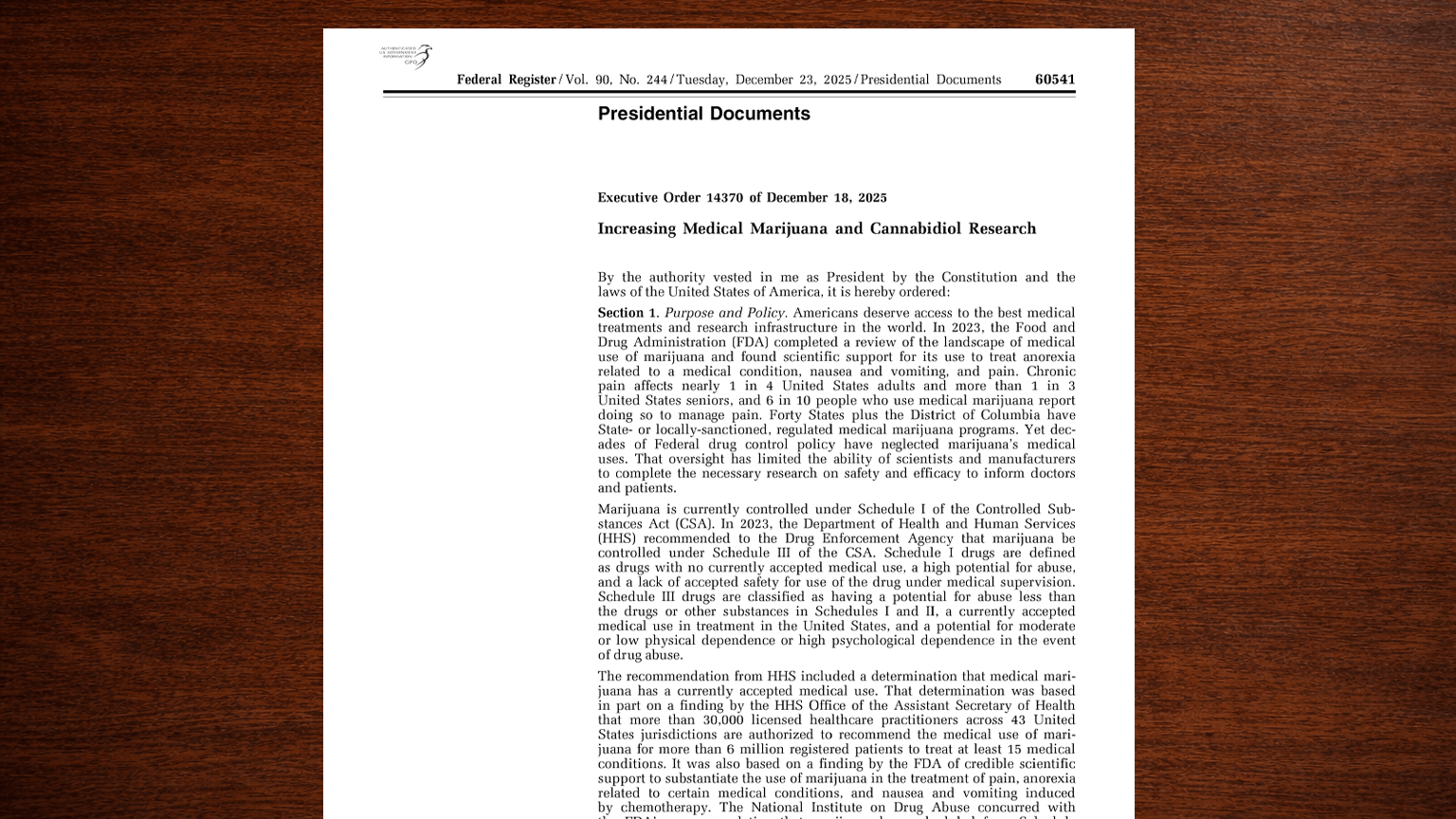
On December 18, 2025, President Trump signed an executive order directing the Attorney General to expedite the rescheduling of cannabis from to Schedule III under the Controlled Substances Act (CSA).
Introduction: A Historic Executive Order and Its Promise
On December 18, 2025, President Trump signed an executive order directing the Attorney General to expedite the rescheduling of cannabis from Schedule I to Schedule III under the Controlled Substances Act (CSA). This groundbreaking move, while not legalizing cannabis federally, represents a monumental shift toward recognizing its therapeutic potential. As a pharmacist with expertise in clinical research and cannabis-based medicine, I’m excited by the possibilities this opens for patients struggling with chronic conditions. For decades, Schedule I status has branded cannabis as having “no accepted medical use” and high abuse potential, stifling research and leaving millions without evidence-based options. Now, as a Schedule III substance, alongside drugs like ketamine, it gains legitimacy, paving the way for expanded clinical trials, safer access, and innovative treatments.
This EO builds on years of advocacy and scientific momentum, including HHS recommendations from 2023.[^1] It doesn’t eliminate all federal controls or override state laws, but it assertively addresses barriers: easing research approvals, potentially lifting tax burdens on businesses via IRS Code 280E, and the EO’s emphasis on medical research is particularly timely.
With opioid overdoses claiming over 100,000 lives annually and dementia cases projected to triple by 2050, natural alternatives like cannabis could reshape healthcare. Patients in states with medical programs already report improved quality of life, but federal hurdles have limited broad validation. Now, with easier access to diverse cannabis supplies for trials, we can expect accelerated discoveries on optimal dosing, strain-specific effects, and long-term safety. While challenges remain, such as interstate restrictions and variable state access, the EO’s focus on medical research signals a positive future. Patients can now look forward to more standardized, effective products, backed by robust data.
Consider the broader implications: This change could integrate cannabis into mainstream medicine, similar to how acupuncture or yoga transitioned from alternative to accepted therapies. For health-conscious individuals, it empowers informed exploration, but always with professional guidance. In the sections ahead, we’ll delve into quality sourcing, detailed therapeutics for key conditions, delivery methods, research expansions, and practical patient steps. This rescheduling isn’t just policy—it’s a catalyst for hope and innovation in wellness.
Fast Facts: Benefits of the Executive Order
- Eased Research Barriers: Schedule III status simplifies approvals for clinical trials, allowing more studies on cannabis’s therapeutic effects without the stringent DEA restrictions of Schedule I. [^1]
- Tax Relief for Businesses: Lifts IRS Code 280E, enabling cannabis companies to deduct expenses, which could lower costs for patients accessing dispensary products. [^3]
- Reduced Stigma: Acknowledges medical value, encouraging healthcare providers to discuss cannabis options and potentially integrating it into treatment plans. [^4]
- Path to FDA Approvals: Opens doors for more cannabis-derived medications to gain FDA approval, similar to Epidiolex, making them eligible for insurance coverage. [^5]
- Patient Access Boost: While not full legalization, it validates state medical programs and could expand safe, tested products nationwide over time. [^6]
The Importance of Quality Sourcing: Why Dispensary Products Are Essential
Now that cannabis is being rescheduled to Schedule III, more patients will have better access to it, but it is still super important to make sure the quality is top-notch for it to really work. Products from unregulated or black-market sources can be risky, including inconsistent potency, harmful chemicals such as pesticides or heavy metals, and inaccurate labels, which can lead to treatments that do not work or even cause adverse side effects. A 2023 study in JAMA found that 70% of non-dispensary CBD products were mislabeled, underscoring the dangers for vulnerable users. [^7] For instance, a patient seeking relief from chronic pain might ingest unintended THC levels, leading to unexpected side effects or suboptimal results. This is especially concerning for older adults or those with compromised immune systems, where contaminants could exacerbate health issues.
In contrast, licensed dispensaries in legal states adhere to rigorous standards, including third-party lab testing. These ensure precise cannabinoid profiles (e.g., THC:CBD ratios) and terpene content, allowing tailored selections. Terpenes enhance the entourage effect, where compounds synergize for better outcomes. In fact, small THC doses can amplify CBD’s anti-inflammatory properties, as seen in pain studies. [^8] For example, myrcene in indica strains promotes relaxation for insomnia, while limonene in sativas uplifts mood for cancer-related depression. Dispensaries provide certificates of analysis (COAs), promoting transparency and safety, which is crucial for conditions requiring consistent dosing.
Beyond testing, dispensaries offer educated staff who can guide selections based on symptoms, such as recommending beta-caryophyllene-rich strains for inflammation. This professional support aligns with the executive order’s focus on research, as standardized products will help generate more reliable clinical data. When patients avoid untested products, often labelled with "marketing doses" (which are usually too weak to do much), they are more likely to see real benefits. As access to cannabis increases after rescheduling, making sure people know how to find quality products will be key to using it safely and getting the most out of its potential.
Imagine a scenario: A chronic pain sufferer switches from unreliable online CBD to a dispensary tincture with verified 20:1 CBD: THC. They experience consistent relief without surprises, tracking progress confidently. This EO makes such scenarios more common, bridging the gap between anecdotal success and evidence-based care. However, always verify state regulations, as rescheduling doesn’t uniformize access nationwide. With more research, dispensaries could evolve into hubs for personalized medicine, recommending products based on genetic or symptom profiles.
Cannabis for Chronic Pain: General Benefits and Opioid Reduction Potential
Chronic pain affects over 50 million Americans, often leading to reduced quality of life and reliance on opioids, which carry addiction risks. The EO’s push for expanded research is particularly exciting here, as it could accelerate studies on cannabis as a safer alternative. Cannabis interacts with the endocannabinoid system (ECS) to modulate pain signals, reducing inflammation and sensitizing pathways without the euphoria of high doses. This natural mechanism offers hope for those with treatment-resistant pain, where traditional options fall short. General benefits span musculoskeletal, inflammatory, and neuropathic types, with patients reporting enhanced mobility and mood.
Recent research highlights its efficacy: A 2025 trial reported a 30% pain drop in participants using cannabis for chronic back pain, with improvements in daily function. [^9] Full-spectrum extracts, dominant in THC and CBD, showed significant reductions in low-back pain compared to placebo. [^10] These align with broader evidence that cannabis improves pain intensity and quality of life in neuropathic and inflammatory cases. [^11] For example, in arthritis, CBD’s anti-inflammatory action via CB2 receptors eases joint swelling, allowing better activity levels. Studies also note cannabis’s role in post-surgical pain, where it reduces reliance on stronger analgesics.
A standout benefit is opioid reduction. Amid the opioid crisis, cannabis emerges as a viable substitute. Research indicates users often taper opioids: A 2024 analysis of over 1,000 chronic pain patients in medical cannabis programs showed a 40% average drop in opioid use, with fewer side effects. [^12] States with access laws report lower opioid overdose rates, suggesting cannabis’s role in harm reduction.
The executive order clears the way for bigger, U.S.-based clinical trials that could back up the promising signs we are seeing about cannabis helping reduce opioid use. This could eventually lead to cannabis being included in new pain management guidelines from groups like the CDC or the American Academy of Pain Medicine. In the end, these advancements could save lives by tackling the opioid crisis. For instance, studies with veterans in medical cannabis programs show that many participants can cut their opioid doses in half, and they also experience fewer cravings and less withdrawal. [^26]
Cannabis for Insomnia: Enhancing Restful, Quality Sleep
Insomnia plagues 70 million Americans, disrupting health and exacerbating conditions like pain or anxiety. The EO’s research facilitation is thrilling, promising deeper insights into cannabis’s sleep-modulating effects. Unlike sedatives with dependency risks, cannabis promotes natural rest via ECS regulation, targeting root causes like stress or inflammation for more restorative sleep. This could benefit everyone from shift workers to chronic illness sufferers, improving overall wellness and cognitive function.
Cannabis enhances quality sleep by influencing cycles: THC shortens latency (time to fall asleep), while CBD prolongs deep non-REM stages essential for recovery and memory consolidation. Indica-dominant strains with myrcene induce calm, reducing racing thoughts that keep people awake. A 2021 randomized trial of THC: CBD extract in 29 insomnia patients improved quality and reduced wake time, with participants noting refreshed mornings and better daytime focus. [^13] CBN, a THC metabolite, extends duration, making CBN-rich edibles ideal for maintenance insomnia where individuals wake frequently, often due to pain or stress.
Human studies affirm benefits: Observational data from over 1,000 users showed better sleep scores with balanced formulations, especially for pain-related disruptions. [^14] For restful sleep, avoid high-THC to prevent REM suppression, which can affect dreaming and emotional processing; opt for 10-25mg CBD + 1mg to 5mg THC. Gummies or capsules from dispensaries ensure consistent dosing, with onset in 30-90 minutes for bedtime routines. Research also ties cannabis to better sleep architecture, increasing slow-wave sleep for physical restoration and reducing latency in anxiety-driven cases.