Cannabis Product Standardization and Quality: Why Consistency Matters for Research
Last Updated
The therapeutic outcome of a cannabis product often depends not just on the amount of THC or CBD, but on the specific combination and ratio of many compounds, a concept known as the entourage effect.
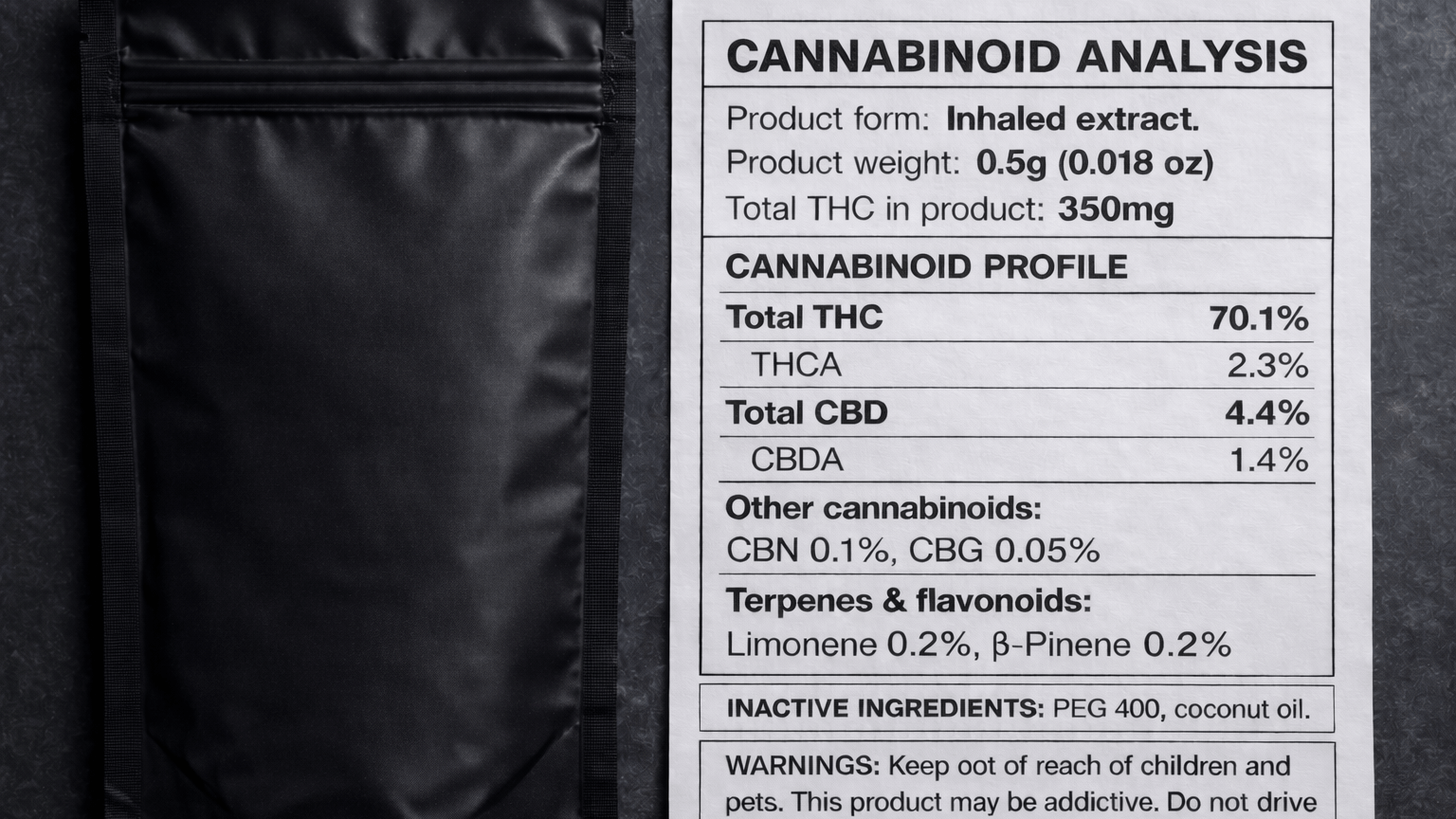
Cannabis is not a single-molecule medicine. The plant produces over 100 identified cannabinoids, more than 200 terpenes, and dozens of flavonoids, each contributing to its overall biological activity. For researchers and clinicians, this chemical complexity presents both an opportunity and a formidable challenge. The therapeutic outcome of a cannabis product often depends not just on the amount of THC or CBD it contains, but on the specific combination and ratio of these compounds, a concept known as the entourage effect, first proposed by Mechoulam and Ben-Shabat in 1998. [^1] [^2]
Product standardization has therefore become one of the most pressing issues in cannabis therapeutics. When cannabinoid and terpene profiles vary significantly from batch to batch or between products, drawing reliable conclusions from clinical research becomes exceedingly difficult. Inconsistent products undermine the scientific process and leave patients uncertain about what they are actually using. [^3]
The scope of this problem became clear in 2017, when Bonn-Miller et al. analyzed 84 CBD products sold online and found that only 31% were accurately labeled for cannabinoid content. Roughly 43% contained less CBD than claimed, and 26% contained substantially more. Some products marketed as "CBD only" contained detectable THC. [^4] Subsequent studies across different product types and markets have confirmed that mislabeling is widespread rather than isolated, a pattern that is unacceptable for any medicine, and particularly problematic for a substance being evaluated in clinical trials.
Standardization is the prerequisite that makes all other progress in this field possible. Without consistent, well-characterized products, neither entourage effect research nor therapeutic optimization can advance on solid footing. With the transition to Schedule III status opening new pathways for rigorous clinical trials, the industry now has both the opportunity and the responsibility to prioritize analytical consistency. This article examines why product standardization matters, what the evidence shows about current variability, and how the field can move toward reliable, reproducible cannabis therapeutics.
Fast Facts
- Cannabis produces over 100 cannabinoids and 200+ terpenes, creating a complex pharmacological matrix that varies by cultivar, growing conditions, and processing methods. [^1]
- The entourage effect hypothesis, first proposed in 1998 by Mechoulam and Ben-Shabat, proposes that cannabinoids and terpenes work synergistically, making product consistency essential for reproducible therapeutic outcomes. [^2]
- A 2017 study found that only 31% of CBD products sold online were accurately labeled for cannabinoid content, with 43% underlabeled and 26% overlabeled. [^4]
- Subsequent analyses of dispensary edibles, hemp-derived oils, and topical products have consistently found that 40–75% of products deviate from label claims by more than 10%. [^5] [^6] [^7]
- The 2024 Johns Hopkins d-limonene trial provided the first controlled human evidence of a specific cannabinoid-terpene interaction, demonstrating that d-limonene selectively reduced THC-induced anxiety without affecting other THC effects. [^8]
- Consistent profiling using HPLC for cannabinoids and GC-MS for terpenes is now considered the analytical standard for research-grade cannabis materials. [^9]
- For clinical trials to produce reliable results, the test product must have documented, reproducible cannabinoid and terpene profiles across all batches used in the study.
Current Evidence and Gaps
The evidence for product variability in the cannabis market is extensive and concerning. The 2017 Bonn-Miller study remains the foundational reference: of 84 CBD products purchased online from 31 companies, only 31% were accurately labeled (within 10% of the stated CBD content). Some products labeled as containing CBD had negligible amounts, while others contained THC levels sufficient to produce psychoactive effects or trigger positive drug tests. [^4]
This finding has been replicated across different product categories and regulatory environments. Vandrey et al. (2015) analyzed edible medical cannabis products from dispensaries in three U.S. cities and found that only 17% were accurately labeled for THC content, with the majority overlabeled, meaning patients received less THC than expected. [^5] Johnson et al. (2022) examined 80 hemp-derived CBD oil products purchased online and from retail stores in Kentucky and found that 46% deviated from label claims by more than 10%. Notably, many products contained detectable THC despite being marketed as hemp-derived. [^6] Spindle et al. (2022) extended this work to topical products, finding that only 24% of 89 products with labeled CBD amounts were accurately labeled, with a median deviation of 21% for in-store products. [^7]
This variability has direct consequences for research. When clinical trials use products with inconsistent cannabinoid and terpene profiles, attributing observed effects to specific compounds or ratios becomes unreliable. A product that performs well in one batch may behave differently in the next, undermining the reproducibility that is the foundation of evidence-based medicine.
For patients, the implications are equally consequential. Someone using a product to manage chronic pain or anxiety may find that the same labeled dose produces markedly different effects from one purchase to the next. This unpredictability can result in under-dosing, over-dosing, or abandonment of cannabis as a therapeutic option entirely.
The gap between current market reality and the needs of rigorous research remains substantial. While some producers now provide detailed Certificates of Analysis (COAs) for every batch, this practice is not universal. Even when COAs are available, variability in testing methods, limits of detection, and reporting standards between laboratories can make direct comparisons difficult.
These data collectively demonstrate that labeling inaccuracy is pervasive across product types, distribution channels, and market segments, and underscore why standardization is no longer optional for serious cannabis therapeutics research.
Future Research Directions
With Schedule III status opening the door to larger, more rigorous clinical trials, product standardization becomes the critical prerequisite for reproducible science. Researchers can now design studies that compare full-spectrum extracts against isolates or evaluate different cannabinoid-terpene ratios under controlled conditions, a significant departure from the Schedule I era, when access to consistent research materials was severely limited.
Testing the Entourage Effect Through Standardized Products
The most direct way to determine the clinical relevance of the entourage effect is through head-to-head comparisons using products with documented, reproducible profiles. Future trials could test standardized full-spectrum extracts with characterized cannabinoid and terpene content against purified CBD or THC at equivalent doses. Objective outcome measures, validated pain scales, polysomnography for sleep studies, biomarker panels for inflammation, will be necessary to determine whether multi-compound products consistently provide additive or synergistic benefits beyond what single compounds deliver.
Systematic Terpene-Cannabinoid Interaction Studies
The 2024 Johns Hopkins d-limonene trial provides a strong methodological template for this work. [^8] Spindle et al. demonstrated in a double-blind, placebo-controlled study of 20 healthy adults that vaporized d-limonene, co-administered with THC, selectively reduced subjective ratings of anxiety and paranoia in a dose-dependent manner without altering other THC-induced effects. This is the first controlled human evidence of a specific cannabinoid-terpene interaction, and it illustrates what is achievable when products are precisely characterized.
Similar trials are needed for other terpenes of interest: myrcene (potential sedative properties), beta-caryophyllene (CB2-mediated anti-inflammatory effects), and linalool (anxiolytic effects through GABA modulation). Preclinical work by LaVigne et al. (2021) found that several cannabis terpenes produced cannabimimetic effects in mice and selectively enhanced cannabinoid activity, providing the rationale for human studies of these specific compounds. [^10] Mapping which combinations produce meaningful interactions, and at what ratios, will allow researchers to identify optimal formulations for specific conditions.
Ratio-Based Formulation Research
For chronic pain research specifically, standardized products will allow investigators to determine whether a 2:1 CBD:THC ratio performs differently from a 1:1 or 5:1 ratio for inflammatory versus neuropathic pain. Adding defined concentrations of key terpenes to these formulations will clarify their contribution to overall efficacy. This level of formulation specificity is precisely what clinicians need to make informed recommendations, what patients need for predictable effects, and what regulators require for reproducible evidence.
See "The Entourage Effect: From Hypothesis to Evidence" (https://www.hytiva.com/learn/entourage-effect-cannabis-terpene-interactions-shaping-future-therapeutics) for a deeper discussion of cannabinoid-terpene interactions.
The Role of Standards in Enabling Research
Standardization is not merely a technical requirement — it is the foundation that makes meaningful clinical research possible. When cannabinoid and terpene profiles vary significantly between batches, attributing observed effects to specific compounds or ratios becomes impossible. This variability has historically been one of the most significant barriers to cannabis research.
With Schedule III status, researchers can access a wider range of research-grade materials and conduct the multicenter trials needed to test specific formulations. However, even with improved access, the quality and consistency of the test material remain paramount. A trial using products that vary by 20–30% in key cannabinoids or terpenes from batch to batch will produce unreliable results regardless of how well-designed the protocol may be.
For clinical trials to generate actionable data, the test product must meet strict analytical standards: comprehensive Certificates of Analysis for every batch, including full cannabinoid and terpene profiles; validated testing methods such as HPLC for cannabinoids and GC-MS for terpenes; clear documentation of growing conditions, harvest timing, and extraction methods to minimize batch-to-batch variability; and stability testing to confirm the product maintains its profile throughout the trial duration.
These standards are already being adopted by leading research institutions and forward-thinking producers. As more trials proceed under Schedule III, consistent, well-characterized products will become the expected norm rather than the exception.
Why Standardization Matters for Patients
For patients, consistent products mean predictable effects and safer use. A person managing chronic pain or anxiety needs to know that the product they purchase today will produce effects comparable to the one they used last week. Inconsistent labeling and variable potency make it difficult to establish effective dosing regimens and increase the risk of therapeutic failure or adverse effects from inadvertent over-dosing.
Standardization also builds clinical trust. When patients and clinicians can review detailed COAs documenting cannabinoid and terpene content, more informed therapeutic decisions become possible. This transparency is particularly important for older adults or those taking multiple medications, where drug interactions and precise dosing are critical safety considerations.
Over the longer term, standardized products will allow clinicians to provide evidence-based recommendations rather than relying on anecdotal reports. As clinical trials using well-characterized extracts generate reliable data, healthcare providers will be better positioned to guide patients toward products that match their specific conditions, symptoms, and risk profiles.
See "The Future of Pain Management Research: Reducing Opioid Dependency" (https://www.hytiva.com/learn/the-future-of-pain-management-research-reducing-opioid-dependency) for discussion of how consistent cannabinoid profiles could support opioid-sparing strategies in chronic pain.
Challenges and Ethical Considerations
The Standardization Problem
The most significant practical challenge facing cannabis research — including entourage effect studies — is product consistency. Cannabis is a biological product whose chemical profile varies with genetics, growing conditions, harvest timing, and extraction methods. The labeling accuracy data reviewed above confirm that the current market falls well short of pharmaceutical standards, and even products claiming third-party testing often fail to meet basic accuracy thresholds.
This challenge is surmountable. Advances in HPLC and GC now allow detailed profiling of cannabinoids and terpenes at the batch level. Organizations like the American Herbal Pharmacopoeia have published cannabis quality standards, and a growing number of producers provide batch-specific COAs. Widespread adoption of rigorous analytical standards, however, remains an industry-wide challenge that must be addressed as research scales up.
Distinguishing Entourage from Artifact
Researchers investigating multi-compound formulations must carefully control for confounding variables. Observed differences between whole-plant extracts and isolated compounds could reflect genuine synergy, but they could also result from differences in bioavailability (extracts may contain lipids that improve absorption), pharmacokinetics (multiple compounds may alter each other's metabolism), or the plant matrix itself. Well-designed trials need to account for these possibilities through appropriate controls, including vehicles matched for lipid content and absorption characteristics.
Participant Diversity
Cannabis research has historically underrepresented older adults, women, and racial and ethnic minorities — groups that often bear the greatest burden of conditions like chronic pain, insomnia, and anxiety. The FDA's 2024 guidance on diversity action plans for clinical trials provides a framework for more inclusive recruitment, which will be essential for ensuring that findings from standardized product trials are generalizable across populations. [^11]
Ethical Transparency
Because product standardization and the entourage effect have significant commercial implications — manufacturers of whole-plant products have a financial interest in validating multi-compound superiority — research in this area must be conducted with rigorous conflict-of-interest disclosures and independent data analysis. The Spindle et al. (2024) d-limonene study provides a model: the authors disclosed that a patent application had been filed for the use of d-limonene to reduce THC-induced anxiety, and that co-author Ethan Russo serves as a scientific advisor to a terpene company. [^8] This level of transparency should be the standard for all product-focused cannabis research.
Frequently Asked Questions
What is the entourage effect? The entourage effect is the hypothesis that the therapeutic effects of cannabis are shaped by the combined action of its many compounds — cannabinoids, terpenes, and flavonoids — working together, rather than by any single compound alone. The concept was first proposed in 1998 and remains an active area of investigation. [^2]
Has the entourage effect been proven? Not definitively. There is supportive evidence from observational studies, preclinical research, and one controlled human trial of a specific cannabinoid-terpene interaction (d-limonene and THC). However, no clinical trial has been specifically designed to validate the entourage effect as a general phenomenon, and the evidence remains preliminary. [^8] [^12]
Why does product standardization matter for research? If the cannabinoid and terpene profile of a product influences its therapeutic effects — as the entourage effect hypothesis predicts — then inconsistent products make clinical trial results unreliable and irreproducible. Standardization ensures that when a trial reports a finding, other researchers can replicate it using the same product specifications.
How bad is the labeling problem? Multiple studies have found that 40–75% of commercial cannabis and CBD products are inaccurately labeled by more than 10%. The problem spans online CBD products, dispensary edibles, hemp-derived oils, and topical products. [^4] [^5] [^6] [^7]
How will rescheduling help? Schedule III status is expected to expand access to diverse, research-grade cannabis materials, increase federal funding eligibility, and enable multicenter trials that compare standardized whole-plant extracts against isolated compounds under controlled conditions.
What terpenes are most studied for interactions with cannabinoids? The most studied include d-limonene (anxiety modulation with THC), beta-caryophyllene (CB2 agonism and anti-inflammatory effects), myrcene (potential sedative properties), and linalool (anxiolytic effects through GABA modulation). [^8] [^10]
Are all cannabis products "full-spectrum"? No. Products vary widely in their chemical composition. Full-spectrum extracts retain the plant's native cannabinoid and terpene profile; broad-spectrum products have THC removed; and isolates contain a single purified compound. Distillation processes can strip terpenes unless they are reintroduced. Product labels and COAs are the most reliable guide to actual composition.
The Takeaway
The entourage effect remains a hypothesis, but it is an increasingly well-supported one — with mechanistic plausibility from preclinical research, suggestive observational data, and now the first controlled human evidence of a specific cannabinoid-terpene interaction from the Spindle et al. d-limonene trial. The scientific question has shifted from whether cannabis compounds can interact to which interactions are clinically meaningful, at what ratios, and for which conditions.
Answering those questions, however, depends entirely on product standardization. None of this research can proceed reliably if the products being tested vary unpredictably from batch to batch. The labeling accuracy data reviewed here — showing that a majority of commercial products fail to meet basic accuracy standards — make the case plainly: the cannabis industry's analytical infrastructure must mature to meet the demands of evidence-based medicine.
Rescheduling provides the regulatory framework needed to advance this work. The coming generation of trials — comparing full-spectrum products against isolates, testing defined terpene-cannabinoid combinations, and using objective biomarkers to measure outcomes — will determine whether the entourage effect translates from a compelling hypothesis into clinical evidence. For patients, clinicians, and product formulators, the stakes are considerable: the answers will shape how cannabis products are designed, labeled, recommended, and regulated for the foreseeable future.