Cannabis and Gastrointestinal Health
Last Updated
Cannabis shows biological plausibility for GI health via the endocannabinoid system. Evidence supports symptomatic relief in IBD (pain, appetite), but limited impact on inflammation.
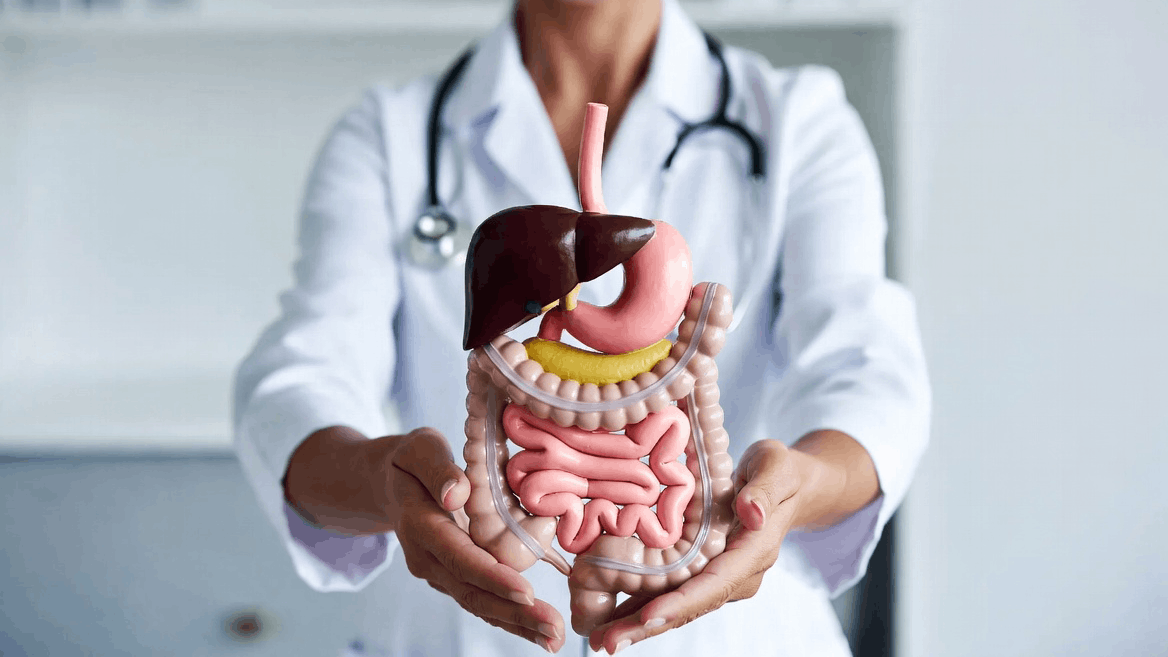
Biological Foundations, Gut-Brain Signaling
Gastrointestinal disorders characterized by chronic inflammation, visceral hypersensitivity, altered motility, and dysregulated gut-brain signaling continue to present substantial therapeutic challenges despite advances in pharmacologic and biologic treatment. In inflammatory bowel disease (IBD), contemporary therapies have improved rates of clinical and endoscopic remission, yet many patients continue to report abdominal pain, poor appetite, fatigue, sleep disruption, and impaired quality of life even when inflammatory activity is partially controlled. In irritable bowel syndrome (IBS) and related disorders of gut-brain interaction, treatment is often complicated by symptom heterogeneity, variable treatment response, high placebo responsiveness, and the central contribution of stress physiology and pain amplification to disease burden. [1]
Within this context, cannabis-derived products have emerged as a topic of increasing clinical and research interest. Their relevance is not based solely on widespread patient use and anecdotal report, but on a biologically plausible mechanistic framework involving the endocannabinoid system (ECS). The ECS is widely expressed throughout the gastrointestinal tract and plays a key role in regulating motility, secretion, epithelial permeability, immune signaling, and visceral nociception. These functions have made cannabinoid-based interventions plausible candidates for investigation in a range of GI conditions, particularly those in which inflammation, pain, nausea, and gut-brain dysregulation co-occur. [1, 2]
The endocannabinoid system comprises cannabinoid receptors (CB1 and CB2), endogenous ligands such as anandamide and 2-arachidonoylglycerol, and the enzymes that synthesize and degrade them. Comparative genomic work mapping ECS gene orthologs across diverse organisms has shown that components of this system are evolutionarily ancient, with FAAH enzyme orthologs traceable to early eukaryotes and CB1-like receptor orthologs arising within the animal lineage (with a notably patchy distribution among invertebrates), a deep evolutionary origin that underscores its fundamental physiological role. [3] Within the GI tract, CB1 receptor signaling is particularly relevant to enteric and sensory neural pathways governing motility, secretion, and pain perception, while CB2 receptor signaling is more strongly associated with immune regulation and inflammatory response. This distribution provides the rationale for studying cannabinoids in conditions involving intestinal inflammation, altered motility, chronic nausea, abdominal pain, and neurogastroenterologic dysfunction. [1, 2]
It is important, however, to distinguish biological plausibility from proven clinical efficacy. There are numerous instances in gastrointestinal medicine in which interventions with strong mechanistic appeal have failed to produce reproducible benefits in rigorous clinical trials. Cannabinoid-based therapies should be evaluated with the same degree of methodological caution. A strong theoretical rationale may justify further investigation, but it cannot substitute for controlled data demonstrating clinically meaningful benefit on patient-centered or disease-specific outcomes. [1, 4]
This distinction is especially relevant in disorders of the gut-brain axis. Contemporary neurogastroenterology recognizes the gastrointestinal tract as part of a bidirectional signaling network integrating the enteric nervous system, autonomic pathways, mucosal immune activity, epithelial barrier integrity, microbial metabolites, endocrine responses, and central stress circuitry. More than 90% of the body's serotonin is produced in the gut, and microbial metabolites, inflammatory cytokines, and vagal signaling all contribute to the bidirectional relationship between gut function and mood. [1, 2] An intervention that affects pain perception, nausea, stress responsiveness, sleep, or appetite may therefore substantially alter a patient's illness experience without necessarily changing the underlying inflammatory or structural substrate of disease. That may still be clinically relevant, but it represents symptomatic modulation rather than disease modification. [1, 2]
In IBD, this distinction has direct implications for the interpretation of treatment response. The clinical objective in IBD is not limited to symptom reduction; it includes control of intestinal inflammation, prevention of structural damage, reduction in corticosteroid dependence, and ideally biomarker and endoscopic remission. By contrast, in IBS and other disorders of gut-brain interaction, therapeutic goals are weighted toward reducing symptom burden, improving function, and improving quality of life, since objective inflammatory lesions are absent by definition. These differences influence both trial design and the interpretation of cannabinoid studies in GI disease. [4, 5]
Interest in cannabis research has also intensified in light of federal rescheduling efforts. In May 2024, the U.S. Department of Justice submitted a proposed rule to move marijuana from Schedule I to Schedule III, and the Drug Enforcement Administration published a corresponding notice of proposed rulemaking. [6, 7] The initial DEA hearing was postponed in early 2025, [8, 9] but the process accelerated thereafter: a December 2025 executive order directed the Department of Justice to expedite rescheduling, [21] and in April 2026 the DOJ placed FDA-approved and state-licensed medical marijuana products into Schedule III while opening new hearing proceedings on the broader rescheduling of marijuana. [22] As of this writing, broad rescheduling of cannabis remains pending that hearing, so discussions of a fully post-rescheduling research environment should still be framed as prospective.
This regulatory context matters because public and commercial enthusiasm can outpace the underlying evidence. There is a risk that policy momentum is interpreted as clinical validation, and that anecdote is positioned ahead of controlled data. The more disciplined view is that cannabis products are biologically relevant to gastrointestinal health and worth investigating, but that current evidence is mixed, condition-dependent, and insufficient to support broad therapeutic claims.
For this reason, this review is structured as a narrative clinical synthesis rather than a systematic review. Its purpose is to summarize the current state of the evidence with explicit attention to the difference between mechanistic rationale, controlled efficacy data, indirect supportive findings, and known safety concerns.
For further reading on the foundational biology of the endocannabinoid system and cannabis's effects on inflammation and digestion, see related articles at Hytiva.com/learn: Cannabis and Chronic Inflammation and Cannabis, Appetite, and Digestion.
Clinical Evidence in Inflammatory Bowel Disease and Irritable Bowel Syndrome
Inflammatory bowel disease represents the GI domain in which cannabis products have undergone the most substantive disease-specific study. This is understandable: patients with Crohn's disease and ulcerative colitis frequently report subjective improvement in abdominal pain, appetite, sleep, and general well-being when using cannabis, even when there is uncertainty regarding effect on mucosal inflammation. These reports are clinically relevant, but they do not eliminate the need to distinguish symptomatic improvement from objective disease control. [1, 5]
The most frequently cited controlled study remains the placebo-controlled Crohn's disease trial published by Naftali and colleagues in 2013. In that study, 21 patients with active Crohn's disease were randomized to receive THC-rich cannabis cigarettes or placebo cigarettes over an 8-week period. The cannabis-treated group demonstrated a strong signal for clinical response, with 10 of 11 patients achieving a reduction in the Crohn's Disease Activity Index greater than 100 points, versus 4 of 10 in the placebo group. Complete remission was observed in 5 cannabis-treated patients compared with 1 placebo-treated patient, a clinically striking but, in the small cohort, statistically non-significant difference (p = 0.43), and several patients were able to discontinue steroid therapy. The findings remain notable and continue to anchor much of the field. The trial was small, however, and should be regarded as signal-generating rather than as definitive proof of efficacy across the broader Crohn's disease population. [10]
Subsequent studies have clarified the limitations of extrapolating subjective benefit to objective inflammatory improvement. In ulcerative colitis, Irving and colleagues conducted a randomized, double-blind, placebo-controlled pilot study evaluating a cannabidiol-rich botanical extract. Although certain symptom-related outcomes suggested possible benefit in some participants, the primary remission endpoint was not met. The trial therefore supported continued scientific interest but did not establish CBD-rich treatment as an evidence-based therapy for ulcerative colitis. [11]
A comparable pattern emerged in the 2021 randomized controlled trial of an oral CBD-rich cannabis extract in Crohn's disease. Naftali and colleagues reported improvement in clinical indices and quality-of-life measures, but these improvements were not accompanied by significant changes in endoscopic findings or inflammatory parameters. The distinction is clinically important: cannabinoid treatment may improve symptom burden and patient-perceived disease activity without demonstrating clear evidence of anti-inflammatory disease control. [12]
Similarly, in a randomized controlled ulcerative colitis trial published in 2021, THC-rich cannabis cigarettes were associated with improvements in clinical activity indices and quality of life. These improvements did not, however, translate into statistically significant anti-inflammatory effects on the Mayo endoscopic score or on laboratory inflammatory markers. Taken together, these trials support the view that cannabis may offer symptomatic benefit in selected patients with IBD, while the evidence for genuine disease modification remains limited. [13]
This interpretation is reinforced by higher-level evidence synthesis. A 2021 systematic review with meta-analysis by Doeve and colleagues concluded that cannabinoids did not induce clinical remission or meaningfully improve inflammatory measures in IBD, although they did improve patient-reported symptoms and quality of life. This remains one of the most clinically useful summaries of the literature: the evidence is more persuasive for symptomatic improvement than for remission induction, mucosal healing, or biomarker normalization. [5]
The distinction is not merely academic. The clinical meaning of a treatment differs substantially depending on whether it reduces pain and improves appetite or whether it suppresses inflammatory activity sufficiently to reduce long-term complications such as strictures, fistulae, or colectomy. A symptom-directed adjunct may still be valuable in practice, particularly for refractory pain, poor appetite, or sleep disruption, but it should not be represented as equivalent to an anti-inflammatory therapy unless the evidence supports that claim. In this regard, the IBD cannabis literature remains suggestive but not definitive. [1, 5]
The evidence base is sometimes broadened through incorporation of data from overlapping but non-identical patient populations. The 2025 observational study by Santonicola and colleagues is an instructive example. The investigators followed 60 patients with fibromyalgia treated with Bedrocan medical cannabis over six months, of whom 76.6% met criteria for at least one disorder of gut-brain interaction. They reported statistically significant improvements in abdominal pain, bloating, abdominal distension, epigastric pain, and epigastric burning. The findings are clinically interesting, particularly because they address overlapping pain-amplification and gut-brain symptom complexes. The study was, however, observational, uncontrolled, and conducted in a fibromyalgia population rather than as an IBD- or IBS-specific randomized trial. It should therefore be interpreted as supportive real-world evidence rather than as direct proof of efficacy for Crohn's disease, ulcerative colitis, or IBS. [14]
The clinical evidence base in irritable bowel syndrome is substantially less developed. From a mechanistic standpoint, cannabinoids remain of considerable interest because IBS involves altered visceral sensation, changes in bowel habit, stress sensitivity, autonomic dysregulation, and symptom amplification through gut-brain pathways. The clinical endocannabinoid deficiency framework proposed by Russo suggests that subnormal endocannabinoid tone may contribute to conditions including IBS, migraine, and fibromyalgia, providing a theoretical basis for cannabinoid supplementation in these functional disorders. [15] This framework remains a hypothesis with preliminary support rather than an established mechanism, but it is reasonable to posit that certain cannabinoid formulations could influence pain perception, nausea, stool-related symptoms, sleep, or stress-mediated symptom exacerbation. Direct clinical evidence in IBS, however, remains sparse and inconclusive. [1, 2]
The best-known placebo-controlled human study in this area is the exploratory crossover trial by van Orten-Luiten and colleagues, in which women with IBS received a 50 mg CBD chewing gum or placebo on a symptom-driven basis. At the group level, the investigators did not observe a statistically significant difference between CBD and placebo on pain scores. The study also documented substantial inter-individual variability and lower-than-anticipated product use, both of which complicate interpretation. The findings do not support a confident efficacy claim for CBD in IBS under the conditions employed. [4]
This negative or inconclusive result should not be overinterpreted as proof that cannabinoid therapies are without value in IBS. Rather, it highlights the methodological difficulty of studying a condition marked by fluctuating symptoms, heterogeneous pathophysiology, and a high placebo response rate. Any credible research program in IBS must account for symptom subtype; sex differences, psychosocial factors, formulation, route of administration, and dose adequacy, and must consider the possibility that a cannabinoid's primary effect may manifest through modulation of sleep or stress reactivity rather than through direct effects on bowel function itself. [1, 4]
This is precisely why continued clinical investigation remains important. The purpose of additional trials is not to validate cannabis products by assumption, but to determine whether any specific formulation, dose, or cannabinoid ratio produces a clinically meaningful and reproducible effect beyond expectancy or nonspecific symptom fluctuation. High-quality studies could clarify whether symptom benefit, if present, is mediated primarily through analgesic effects, anxiolytic effects, sleep improvement, altered motility, or broader modulation of gut-brain signaling. Such studies could also identify which patient phenotypes, for example, those with prominent pain, comorbid anxiety, or disrupted sleep, are most likely to respond. [2, 4]
Accordingly, the current clinical interpretation across IBD and IBS should remain measured. In IBD, the available evidence supports greater confidence in symptom relief than in anti-inflammatory efficacy or disease modification. In IBS, direct human evidence remains limited and inconclusive, although the biologic rationale and sustained patient demand justify further rigorous study designed to address the complexities unique to functional gut-brain disorders. [1, 4, 5]
Cannabinoid Hyperemesis Syndrome, Safety, and Future Research Priorities
Any clinically serious review of cannabis and gastrointestinal health must include cannabinoid hyperemesis syndrome (CHS). CHS is the clearest example of the paradox that a substance commonly used for antiemetic and appetite-stimulating purposes can, under conditions of chronic exposure, produce a syndrome characterized by recurrent nausea, vomiting, and abdominal pain. The syndrome is now well recognized in gastroenterology and emergency medicine, and compulsive hot bathing behavior is widely regarded as a useful diagnostic clue, even if it is not pathognomonic. [16, 17]
The classic clinical presentation involves chronic cannabis exposure, frequently heavy use, followed by episodic or cyclic vomiting, severe nausea, abdominal pain, repeated healthcare utilization, and transient relief with hot showers or baths. The condition is clinically significant not only because of its symptom burden but also because recognition is often delayed. Patients may undergo repeated imaging, laboratory testing, and endoscopic evaluation before cannabis exposure is identified as central to the syndrome. In some cases, patients paradoxically escalate cannabis use in an attempt to suppress nausea, thereby perpetuating the disorder. [16, 17]
The principal management message remains clear: cessation of cannabis is the only established definitive treatment. Acute supportive management may include hydration, correction of electrolyte abnormalities, antiemetic strategies, dopamine antagonists, topical capsaicin, and additional symptom-directed interventions in selected settings. The evidence supporting these acute treatments remains limited, and contemporary expert guidance continues to place cannabis cessation at the center of management. [17, 18]
This point is especially important because consumer discussions of CHS often understate its seriousness. The syndrome is not merely occasional nausea associated with heavy use; it can involve severe, recurrent vomiting, dehydration, repeated emergency department presentations, and substantial diagnostic confusion. For clinicians counseling patients about gastrointestinal use of cannabis products, CHS should be regarded as a major safety consideration rather than a rare footnote. [16, 17]
A harm-reduction discussion may still have a place in practice, provided it is framed carefully. Some clinicians and commentators have suggested that patients unwilling or unable to stop immediately may benefit pragmatically from reducing exposure to high-THC or very-high-potency products. Such counseling may be reasonable as a real-world transitional conversation, but it should not be represented as an evidence-based substitute for cessation. The current literature supports cessation considerably more strongly than it supports any lower-THC substitution strategy as a reliable means of preventing or resolving CHS. [17, 19]
Beyond CHS, broader safety considerations also complicate interpretation of GI cannabis use. Cannabis products vary substantially in cannabinoid composition, route of administration, pharmacokinetics, onset time, psychoactive liability, and bioavailability. [20] A patient using inhaled THC-rich flower for nausea and appetite stimulation is not receiving the same pharmacologic intervention as a patient taking an oral CBD-rich extract, nor is either scenario identical to a standardized full-spectrum product used in a formal study. This heterogeneity contributes materially to the difficulty of translating real-world patient reports into evidence-based clinical recommendations. [1, 2]
Route of administration is particularly relevant. Inhaled products provide rapid onset and may facilitate symptom-driven titration, which can be attractive in the management of acute nausea or episodic pain. Oral products, by contrast, may be more practical for chronic use but are complicated by delayed onset, first-pass metabolism, and greater variability in effective exposure — all factors well characterized in the cannabinoid pharmacokinetics literature. [20] These differences are clinically meaningful and should not be treated as secondary technical details. From a trial-design perspective, formulation and route of administration are central determinants of interpretability and effect size.
The federal rescheduling of marijuana is relevant to this discussion because broader rescheduling, if completed, could improve the feasibility of studying standardized botanical preparations and conducting larger multicenter trials with more consistent control of product chemistry and dosing. The regulatory picture has moved substantially: after the May 2024 proposed rule and an early-2025 hearing postponement, [6, 7, 8, 9] a December 2025 executive order directed the DOJ to expedite the process, [21] and in April 2026 the DOJ placed FDA-approved and state-licensed medical marijuana products into Schedule III while initiating new hearing proceedings — scheduled for June 29, 2026 — on the broader rescheduling of cannabis. [22] Even so, broad rescheduling is not yet complete, so any claim that rescheduling has already transformed the GI cannabis research environment would be premature, even as the trajectory of the regulatory process remains an important development worth monitoring.
The next phase of GI cannabis research should be substantially more methodologically disciplined than much of the early literature. In IBD, future clinical trials should employ standardized formulations with clearly defined cannabinoid content, explicitly distinguish symptom-based endpoints from inflammatory endpoints, and incorporate objective biomarkers of disease activity such as fecal calprotectin, C-reactive protein, and endoscopic scores. Trials should also prespecify meaningful change thresholds for these measures to ensure clarity in interpretation. In IBS and related gut-brain disorders, future studies should improve patient phenotyping (including pain-predominant versus bowel-pattern-predominant subtypes), account for the high placebo response rate, use rigorous and transparent dosing strategies, and evaluate outcomes that extend beyond pain to include sleep quality, anxiety symptoms, global functional status, and stability of bowel patterns over time. [1, 4, 5]
It is also increasingly likely that any clinically meaningful response to cannabis products will prove to be phenotype-specific rather than universal. Much of the existing literature treats "cannabis" as though it were a single, monolithic intervention applied to conditions that are themselves biologically heterogeneous. A more plausible model for future inquiry is one in which only certain subgroups, patients with prominent nausea, appetite loss, pain amplification, sleep disturbance, or stress-related exacerbation, derive consistent benefit. If that is correct, future advances will depend not only on larger sample sizes but on better patient stratification, symptom clustering, and more precise characterization of the intervention itself, including defined cannabinoid ratios, terpenoid profiles, routes of administration, and pharmacokinetic properties. [1, 2]
The most defensible current conclusion is therefore balanced and clinically restrained. Cannabis products have a credible biological rationale in gastrointestinal medicine, grounded in endocannabinoid signaling and plausible mechanisms of neuromodulation and visceral regulation. In IBD, the controlled literature supports symptomatic benefit in selected contexts. Convincing evidence for objective anti-inflammatory disease modification, however, remains limited; direct clinical evidence in IBS is sparse and inconclusive; and CHS remains a clear and clinically important adverse outcome associated with chronic cannabis exposure. The field warrants neither dismissal nor enthusiasm untethered from evidence. It warrants more rigorous trials, better standardized products, clearer endpoint selection, and more disciplined interpretation than it has often received to date. [4, 5, 17]