Researchers Identify Hemp-Derived Material as Promising Plastic Substitute
Last Updated
“Our work has established CBD-based polycarbonates as sustainable replacements for widely used thermoplastics such as PET.”
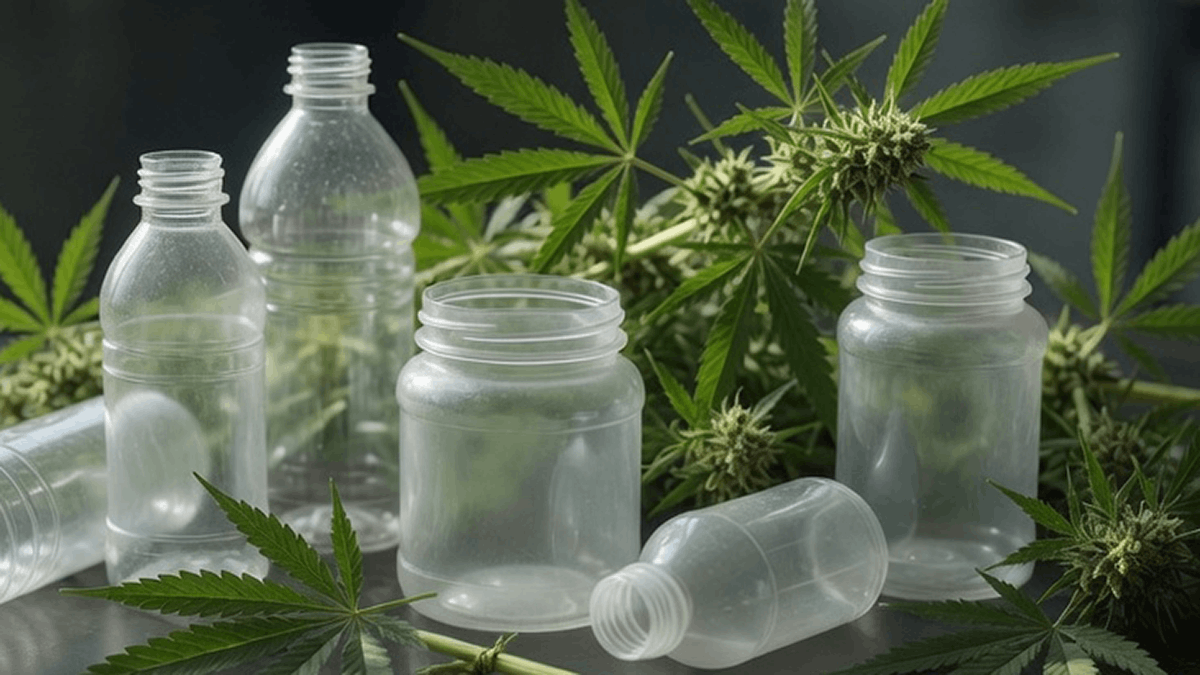
Scientists have developed a hemp-based thermoplastic that stretches up to 1,600 percent of its original length while matching the heat resistance and strength of common petroleum-based plastics like PET. The peer-reviewed study, published April 30 in the Cell Press journal Chem Circularity, shows how cannabidiol extracted from hemp can serve as a renewable building block for high-performance materials.
The material, called polycannabidiol carbonate or pCBDC, is about 92 percent bio-based. Researchers synthesized it through an ambient-temperature solution process that avoids some of the high-heat or multi-step methods used in traditional plastic production. In testing, the thermoplastic demonstrated strong elasticity and toughness, traits that could suit it for flexible packaging, films, or impact-resistant parts.
It also maintains performance at higher temperatures thanks to a high glass transition temperature. This means the material stays rigid and stable near conditions that would soften many other bio-based plastics. The combination of stretch and heat resistance gives it PET-like qualities, making it relevant for bottles, containers, and other everyday applications that currently rely on fossil-fuel plastics.
Many conventional polycarbonates depend on bisphenol-A, or BPA. The hemp-derived version uses CBD, which has a similar molecular structure. This allows the new material to deliver comparable polymer strength without the synthetic compound that has raised health and environmental questions in some uses.
The research team established that these CBD-based polycarbonates can function as sustainable replacements for widely used thermoplastics such as PET. The material offers transparency, toughness, and processability that meet engineering standards while drawing from a fast-growing agricultural source instead of oil.
To support scaling, the scientists created a detailed processing framework. It connects the material’s molecular design to real-world manufacturing steps, including how it melts, flows, and orients during shaping. This guidance reduces the need for extra costly or complex stages while preserving performance and manufacturability.
Because it is a thermoplastic, the material can be melted and reformed, supporting easier recycling compared with some alternatives. This trait aligns with goals to keep plastics in use longer and reduce waste that ends up in landfills or the environment.
“Our work has established CBD-based polycarbonates as sustainable replacements for widely used thermoplastics such as PET,” the researchers stated. They noted that the processing science framework links molecular architecture directly to melt processability, stretchability, and production consistency.
Key contributors include Mukerrem Cakmak of Purdue University and Gregory Sotzing of the University of Connecticut. Their work demonstrates that CBD from hemp biomass can be used directly as a monomer to create a non-food, renewable engineering plastic with strong practical qualities.
Hemp provides a renewable, non-food feedstock that grows with relatively low input requirements. As cultivation expands, the cost of CBD could decrease, improving the economics of producing this type of plastic at larger scales.
The study presents clear evidence of performance and processability in a lab and pilot context. Further development, including larger-scale trials and full life-cycle assessments, will determine how quickly it moves into commercial products. Still, the published results and processing guidelines give manufacturers a concrete foundation for exploring this hemp-derived option as one path toward lower-impact plastics.