New Study Reveals What Symptoms Older Adults Would Use Edibles For
Last Updated
Researchers gain valuable insight on the motivations and preferences of older adults and cannabis edibles.
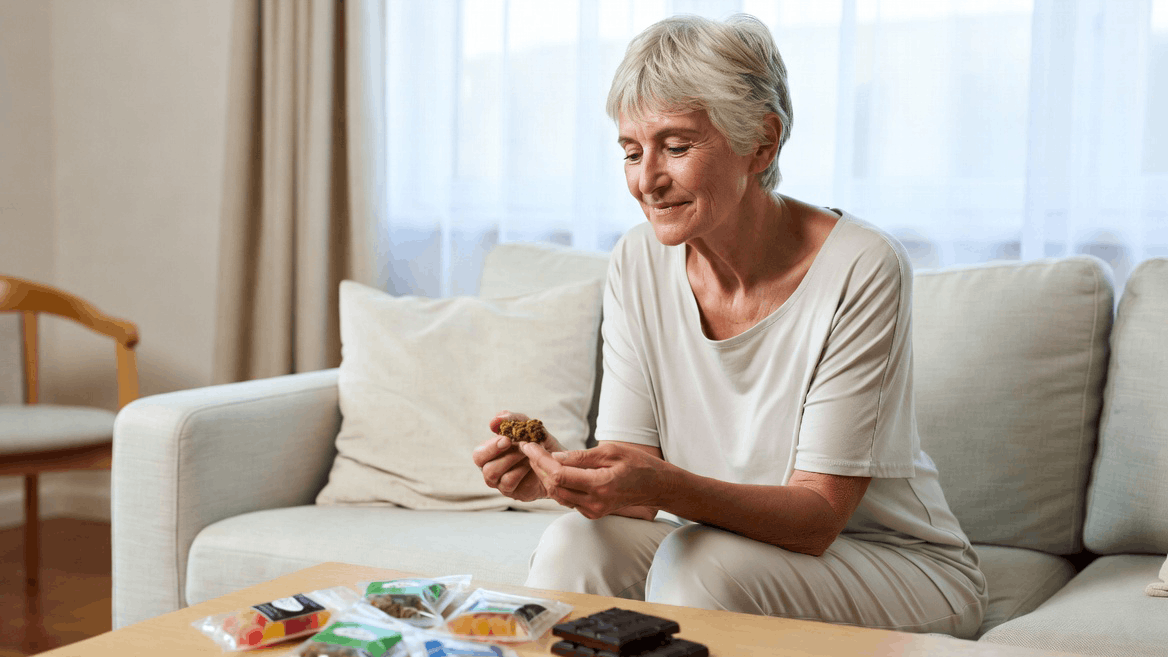
A new study has examined why some older adults consider cannabis edibles as a way to manage common health issues. Researchers spoke with 169 adults age 60 and older in Colorado who were not regular cannabis users but planned to try edibles for the first time. The findings, published May 1 in JAMA Network Open, show that sleep problems, pain, and mental health concerns top the list of reasons these seniors turn to cannabis products.
Sleep stood out as the leading motivation. About 57 percent of participants said they wanted to use edibles to improve their rest. Half reported interest in relief from pain, while 25 percent mentioned mental health issues such as depression or anxiety. Many listed more than one symptom, which is common as people age and these concerns often overlap.
The study also asked participants which types of edible products they preferred. Most chose items that combine THC and CBD. THC is the compound linked to mild psychoactive effects, while CBD does not cause intoxication. When asked about their choices, 57.5 percent selected balanced products containing both compounds. Another 28.7 percent favored CBD-dominant options, and just 13.8 percent picked those that were mainly THC.
Participants described their decisions in practical terms. Many said they turned to cannabis after other treatments fell short or because they wanted to avoid or reduce prescription medications. They often cited concerns about side effects from pills or simply taking too many of them. Word-of-mouth recommendations from friends and family played a major role. People shared stories of how edibles helped with sleep or pain, and those accounts shaped their own interest. Many also mentioned the hope for a better quality of life, such as feeling more comfortable and enjoying time with family.
Rebecca Delaney, the study’s first author and an assistant professor of population health sciences at the University of Utah Health, noted that participants sought everyday improvements. “Overall, they really wanted better quality of life, reducing their pain, getting better sleep, and being able to enjoy time with family and friends a little bit more,” she said.
Senior author Angela Bryan, a professor of psychology and neuroscience at the University of Colorado Boulder, added that the group was not looking for a strong high. “For the most part, we found that these folks aren’t really interested in getting high. They just want to feel better,” she explained. Many viewed the THC-CBD combination as a “Goldilocks option” that offered benefits from both compounds without going too far in either direction.
The research team pointed out that conversations with doctors were rare. Instead, participants often relied on advice from dispensary staff or personal stories. Researchers say this highlights a gap in healthcare support. Delaney and Bryan hope the findings will encourage more open talks between older patients and their physicians so people can make informed choices.
The study has some important limits. It took place in Colorado, where recreational cannabis is legal, and only included adults who already showed interest in trying edibles. Results may differ in states with stricter rules or among people who have no interest in cannabis. The authors plan to share more data soon on how the products actually affected balance, cognition, and other measures in these participants.
Overall, the research adds clear details to the picture of rising cannabis use among older adults, who make up one of the fastest-growing groups of users in the United States. It shows that many seek symptom relief through edibles as a gentler alternative to traditional medicines. The study does not offer medical advice, but it provides a closer look at real motivations and preferences that could help guide future education and support for this age group.