Lawmakers Introduce Measure to Regulate Hemp Drinks Like Alcohol
Last Updated
A bipartisan House bill aims to prevent a federal ban on hemp-derived beverages by regulating them like alcohol.
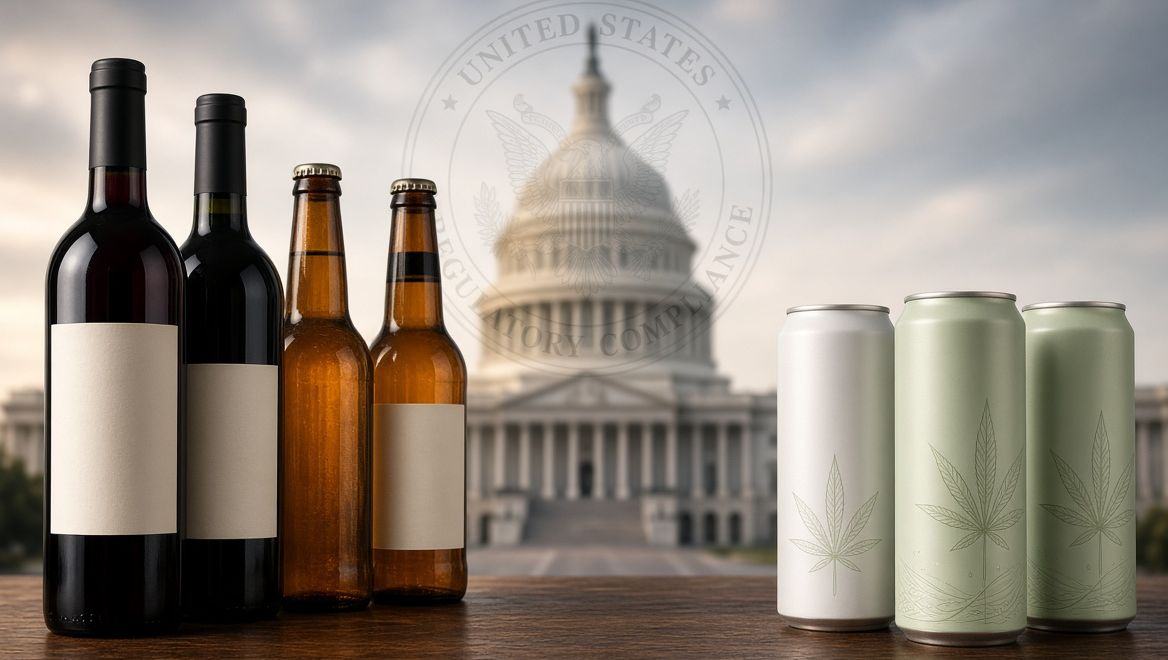
Two members of Congress introduced bipartisan legislation Monday that would keep low-dose hemp-derived THC beverages legal under a regulatory framework modeled on the alcohol industry, seeking to avert a looming federal restriction that industry estimates say threatens a multi-billion-dollar market.
Rep. Beth Van Duyne (R-Texas) and Rep. Greg Landsman (D-Ohio) sponsored the Beverage Regulatory Parity Act. The bill would exempt qualifying hemp beverages from a scheduled ban on most intoxicating hemp products set to take effect later this year. Under the proposal, drinks containing up to 5 milligrams of THC could be manufactured, distributed, and sold to adults 21 and older.
The legislation would impose a three-tier distribution system identical in structure to the one long used for alcohol. Manufacturers could sell only to wholesalers, wholesalers only to retailers, and retailers only to consumers. No company would be permitted to hold interests across more than one tier.
Primary oversight would fall to the Treasury Department’s Alcohol and Tobacco Tax and Trade Bureau (TTB), which would regulate permits, testing, packaging, labeling, and trade practices in consultation with the Department of Health and Human Services and the Department of Agriculture. The bill also requires mandatory testing and labeling, restricts marketing aimed at children, and bans synthetically derived cannabinoids.
A new federal tax would apply: 8 cents per milligram of intoxicating tetrahydrocannabinol content in each beverage, collected when the product leaves the manufacturer’s premises.
Van Duyne described the measure as a practical alternative to prohibition. “The Beverage Regulatory Parity Act brings long-overdue certainty to the industry by regulating these beverages with the same proven structure that has successfully governed alcohol for decades,” she said in a statement. “American families and responsible businesses deserve structure and sensible regulations that protect children while allowing adults to choose beverages they prefer.”
Industry voices have voiced support. Jake Bullock, CEO and co-founder of hemp beverage company CANN, called the bill “a significant and encouraging step toward replacing the looming federal ban with a permanent framework for low-dose hemp beverages,” citing its potency caps, age standard, testing requirements, and alcohol-style distribution system.
The proposal arrives as Congress has already moved to briefly delay the broader hemp restrictions, buying additional time for a more durable solution. Supporters argue that low-dose beverages differ from higher-potency hemp products and can safely operate under rules familiar to alcohol regulators and distributors. The bill’s path forward will likely turn on negotiations over tax rates, potency limits, and the division of authority among federal agencies and the states.