DEA Grants First Federal Registrations to More Than 900 Medical Marijuana Dispensaries
Last Updated
Qualifying medical marijuana dispensaries are now receiving DEA registration under a 2026 Attorney General order that shifts covered medical cannabis to Schedule III.
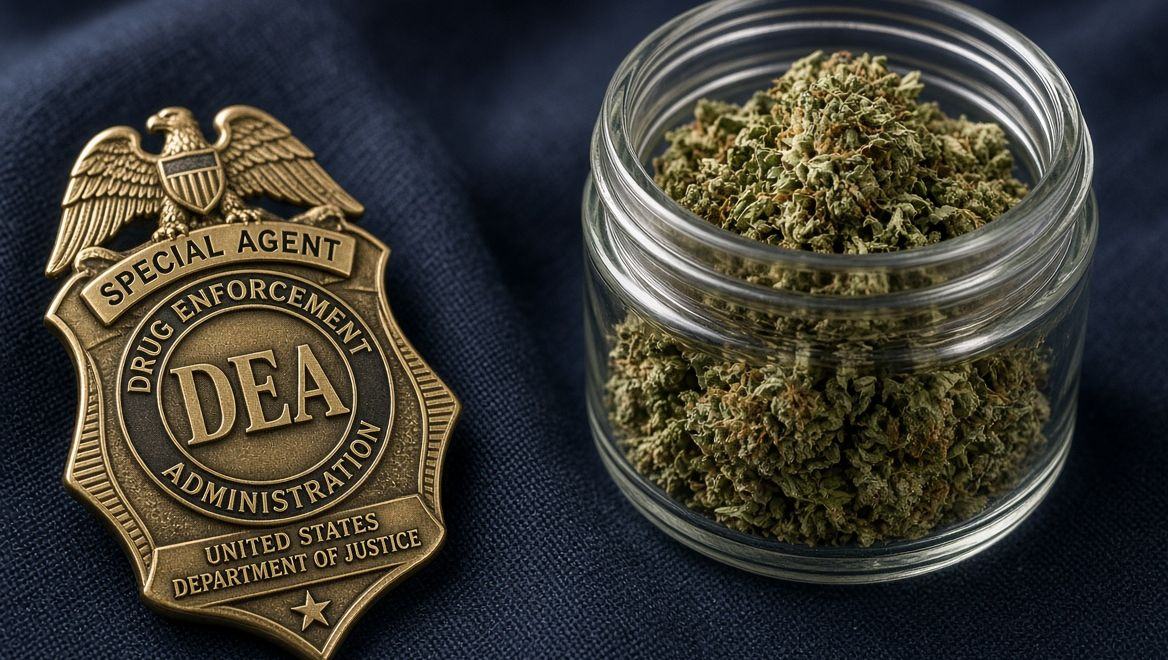
The Drug Enforcement Administration has begun issuing the first federal registrations to state-licensed medical marijuana dispensaries, recognizing more than 900 locations across seven states under an Attorney General’s order that places qualifying medical cannabis activities in Schedule III of the Controlled Substances Act.
The Department of Justice announced the initial registrations on October 30, 2026. They cover dispensaries in Alabama, Florida, Mississippi, South Dakota, Texas, Virginia, and West Virginia. Each applicant was required to complete the DEA’s pre-registration investigation and satisfy federal requirements for security, recordkeeping, and inventory controls before receiving registration.
Attorney General Todd Blanche said the step would help ensure broader access to chronic pain treatment while the department continues to prosecute illegal marijuana trafficking. The registrations represent the first phase of implementing Blanche’s April 23, 2026, order under 21 U.S.C. § 811(d). That order moved marijuana products covered by a qualifying state medical marijuana license, along with FDA-approved marijuana products, from Schedule I to Schedule III.
Adult-use cannabis remains a Schedule I controlled substance. The order applies only to defined qualifying medical marijuana activities and does not authorize recreational use or other marijuana activities outside its scope. A separate administrative proceeding continues to consider broader rescheduling of marijuana generally.
State licensure alone does not grant federal registration automatically. Applicants must operate under a state medical marijuana framework consistent with federal law and U.S. international treaty obligations, and they must pass the DEA’s investigation. Registered dispensaries will face ongoing federal obligations typical of Schedule III handlers.
Dual-license businesses are excluded from the process when a single license permits both medical and non-medical dispensing. The DEA has denied applications on these grounds, including in Minnesota, where officials determined that dual-purpose licenses fall outside the definition of a “state medical marijuana license.” Granting registration in such cases, the agency has said, would be inconsistent with the Controlled Substances Act and treaty obligations because non-medical sales would constitute diversion of a Schedule III substance. Most of the initial registrations went to medical-only programs, with Virginia as a limited exception because it has not yet launched adult-use licensing.
Dispensaries generally applied through the DEA’s Form 224 process during an expedited 60-day window that closed in June. Manufacturers, distributors, and analytical laboratories use DEA Form 225 to seek Schedule III registration for cultivation, production, transfer, or testing of covered medical marijuana. Nearly 7,000 timely applications from dispensaries, manufacturers, and distributors remain pending nationwide. The DEA is processing these in phases and has directed registered entities and timely applicants to establish compliant supply chains by November 29, 2026.
The change places qualifying medical operators under a federal controlled-substance framework for the first time, potentially affecting tax treatment under Section 280E of the Internal Revenue Code for registered medical businesses while leaving adult-use operators subject to prior rules. Broader effects on banking, research, and patient access remain subject to further implementation and any final outcome of the pending full-rescheduling proceeding.