
The Evolution and Impact of Rear Wing Design in F1
A look at how rear wing design transformed speed, control, and competition in F1
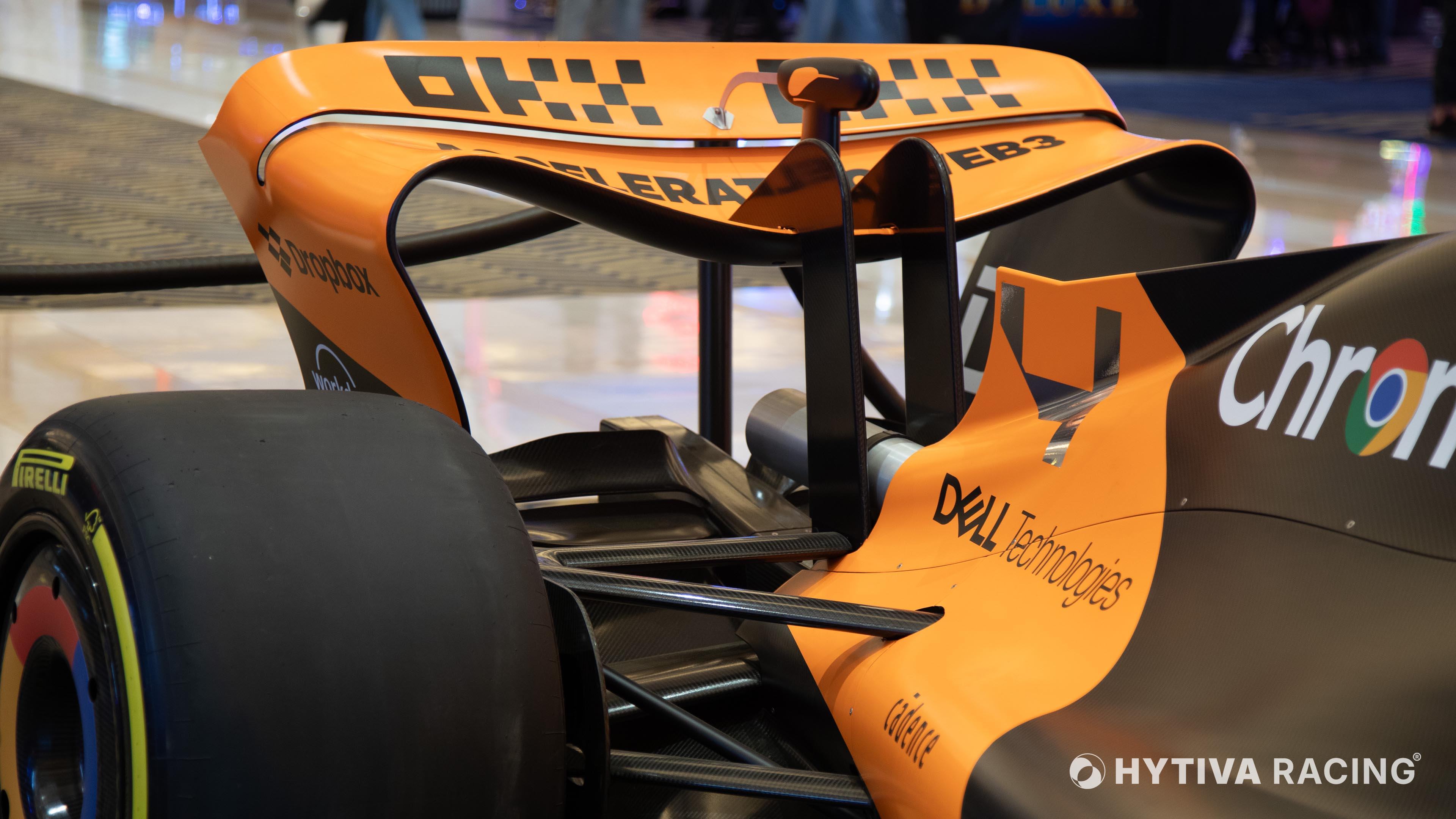
In Formula 1, where fractions of a second decide victory, the rear wing stands as one of the sport’s most crucial—and misunderstood—aerodynamic components. To the untrained eye, it is a simple curved surface mounted above the car’s tail. To engineers and aerodynamicists, it is a precision instrument that dictates how the car grips, accelerates, and overtakes.
Over the years, the design and regulation of the rear wing have profoundly influenced not only team performance but also the quality of on-track racing. The rear wing embodies the fine balance between physics, regulation, and performance that defines modern Formula 1 engineering.
The Science of Downforce and Drag
At its core, the rear wing functions like an inverted aircraft wing. Instead of generating lift, it produces downforce—a downward pressure that presses the car onto the track, increasing tire grip through corners. Downforce is a vertical aerodynamic force that pushes down on the car to generate more grip and enable faster cornering.
However, this aerodynamic advantage comes with a trade-off. Downforce increases drag—the air resistance that slows a car on straights. Teams must therefore adjust their rear wing configuration according to circuit characteristics. Tracks such as Monza demand minimal drag for high-speed performance, while Monaco requires maximum downforce for its tight, low-speed corners. This delicate balance makes rear wing setup one of the most strategic aspects of Formula 1 car tuning.
Beyond cornering performance, the rear wing also plays a critical role in airflow management. It helps organize the turbulent air (the “wake”) behind the car, which affects not only its own stability but also the performance of any car following closely behind.
Regulation Overhaul: The 2022 Revolution
The introduction of the 2022 Formula 1 aerodynamic regulations marked a turning point in rear wing philosophy. The new design was not only about improving performance—it was also about improving racing itself.
The 2022 rear wing featured several critical changes:
- Simplified Wing Profile: The shape and overlap of the two wing elements were tightly controlled to minimize turbulent air generation.
- Swept Endplates: The vertical plates at each end of the wing were reshaped to sweep inward, directing airflow toward the car’s centerline and narrowing the wake behind the car.
- Radiused Corners: Previously, sharp edges at the endplates created powerful vortices that disturbed following cars. The new design softened these edges to produce cleaner airflow.
- Return of the Beam Wing: Positioned below the main wing, the beam wing works with the diffuser to extract air from the car’s underbody, increasing efficiency and reducing dependency on the upper wing for downforce.
These refinements meant the rear wing was no longer just a tool for grip, but also an instrument of racecraft. By producing a narrower, less turbulent wake, following cars could maintain closer proximity through corners and straights, encouraging more overtaking opportunities and tighter competition.
The Rear Wing’s Role in Modern Aerodynamic Strategy
In modern Formula 1 design, the rear wing is both a performance enhancer and an aerodynamic manager. While its primary purpose remains the generation of downforce, its strategic value lies in how it interacts with the rest of the car’s aero package.
- Aerodynamic Balance: The rear wing determines the balance between front and rear downforce. A poorly tuned wing can cause understeer or oversteer, compromising cornering speed and tire wear.
- Wake Control: The rear wing’s shape influences how air exits the car. A smoother wake helps following cars stay closer, which was one of the key goals of the 2022 regulations.
- Circuit-Specific Adjustability: Each circuit demands unique aerodynamic configurations. Teams bring multiple rear wing designs per season—low-drag for high-speed circuits, high-downforce for technical ones—to suit each track’s profile.
- Regulatory Boundaries: Formula 1’s rulebook dictates strict measurements, curvatures, and gaps for rear wings. Within these constraints, teams innovate at the margins—optimizing endplate curvature, flap angles, and beam wing integration for minimal drag and maximum grip.
The Competitive and Technical Impact
The regulatory changes to the rear wing and broader aerodynamic system fundamentally reshaped how teams approached car development.
- More Ground Effect Dependency: With a higher proportion of downforce now coming from the underfloor, teams shifted their design focus toward managing airflow beneath the car.
- Revised Setup Philosophies: Rear wing tuning became about optimizing efficiency rather than pure downforce, demanding closer coordination between chassis, suspension, and aerodynamic departments.
- Improved Racing Quality: The changes reduced the “dirty air” problem, allowing trailing drivers to follow more closely without suffering severe front-end instability—a recurring issue before 2022.
- Innovation Race: Teams found new opportunities in refining beam wing and diffuser integration, pushing the aerodynamic envelope within tighter regulations.
A Future of Constant Evolution
Even with the current regulations, Formula 1’s rear wings continue to evolve as teams seek fractional gains. Advancements in computational fluid dynamics (CFD), wind tunnel testing, and additive manufacturing enable engineers to refine surface shapes and optimize airflow with extraordinary precision.
Future revisions are expected to focus on sustainability and simplification, ensuring performance without ballooning costs or aerodynamic complexity. As the sport pushes toward 2026’s new technical regulations, which will introduce revised power units and potential aerodynamic tweaks, the rear wing will once again adapt—balancing innovation, regulation, and entertainment.
Final Insight
The rear wing of a Formula 1 car remains one of the sport’s most iconic and technically intricate components. It represents the perfect intersection of physics, artistry, and strategy—where aerodynamic theory meets competitive ambition. From the sweeping rule changes of 2022 to the fine-tuned designs of today’s contenders, it has evolved from a mere downforce generator to a cornerstone of racing spectacle.
For the teams, it is a battleground of innovation and regulation. For drivers, it is the invisible hand that glues them to the circuit. And for fans, it is a symbol of why Formula 1 is as much about engineering excellence as it is about raw speed. The rear wing does not just keep the car stable—it keeps the sport soaring.